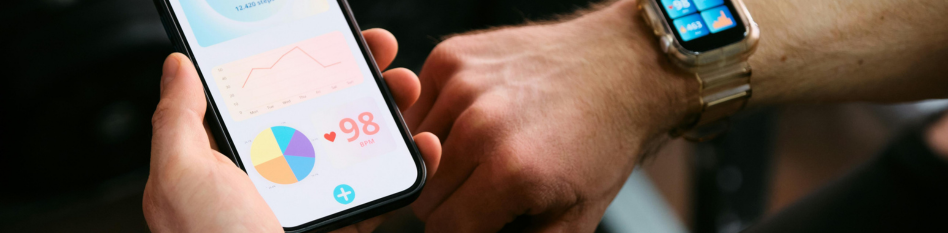
Should Your Gym App Sync With Wearables?
Quick answer: Wearable sync sounds like an obvious feature to add, but it's not free and it's not universally worth it. It makes sense for gyms built around coaching and personalization. It adds cost and complexity most small gyms don't need, and it comes with a real data consent requirement that has to be built in from day one.
What Does Wearable Sync Actually Mean for a Gym App?
Wearable sync connects a member's Apple Watch, Garmin, WHOOP, or Fitbit to their profile inside a gym app, so workout data, heart rate, and recovery information flow in automatically instead of being entered by hand.
Why gyms are being told this is essential
Nearly every gym software vendor is pitching this as the top feature to add in 2026, with wearable adoption among gym members estimated at around 70 percent. That number makes it sound like a must-have. It doesn't answer whether a specific gym actually benefits from building it.
What Does Wearable Integration Actually Cost to Build and Maintain?
This is the part most promotional pages skip entirely.
Multiple ecosystems, multiple integrations
Apple HealthKit, Garmin Connect, WHOOP, and Fitbit each have separate APIs, separate data formats, and separate approval processes. Supporting all four properly is not one integration. It's four, each with its own maintenance burden when a platform changes its API.
Ongoing sync reliability
Workout data doesn't always sync cleanly. A missed sync, a delayed update, or a mismatched timestamp between a wearable and the gym app creates a support request, not a magic engagement moment. Someone on staff or in product support ends up troubleshooting why a member's data didn't show up.
The consent and data-handling requirement
Data pulled from Apple HealthKit specifically cannot be used for advertising or shared with third parties without a member's explicit consent, and this has to be built into the system from the start, not added after launch. A gym or app that treats this as an afterthought is taking on real compliance risk, not just a technical shortcut.
When Does Wearable Sync Genuinely Help a Gym?
It's not a universal yes or no. It depends heavily on what kind of gym is asking.
Gyms built around coaching and personalization
A studio where trainers actively adjust programming based on recovery and heart rate data gets real value from wearable sync, since coaches can personalize sessions using data that used to require a member to report it manually.
Gyms with strong member engagement goals
Automatic workout logging removes the friction that causes most members to abandon manual tracking within a few weeks. For a gym trying to build daily engagement habits, that friction removal genuinely matters.
Gyms tracking activity beyond the four walls
Wearable data shows a member's total activity, not just what happens during a visit. For gyms that want a complete picture of member health and behavior, this fills a real gap that check-in data alone can't.
When Does Wearable Sync Not Make Sense?
For a large share of gyms, this feature adds cost without a matching return.
Small, single-location gyms with limited coaching staff
If a gym doesn't have trainers actively using recovery or heart rate data to adjust programming, wearable sync becomes a feature nobody acts on. The data flows in, gets displayed, and nothing changes about how the gym actually coaches its members.
Gyms where members don't already wear a device
Building and maintaining four separate integrations for a member base where only a small fraction owns a compatible wearable is a poor use of resources. The 70 percent adoption figure is an industry average, not a guarantee for any specific gym's membership.
Gyms already stretched thin on support capacity
Every new integration is a new source of support tickets when sync fails or data looks wrong. A gym without spare staff capacity to handle that adds friction for both members and the team, not less.
What Should a Gym Check Before Deciding Either Way?
A few honest questions cut through the marketing noise faster than any feature comparison.
Do members actually ask for this?
If members aren't requesting wearable sync, building it speculatively rarely pays off. Feature requests that come from actual member behavior are a stronger signal than an industry trend report.
Will staff actually use the data?
If trainers won't change how they coach based on recovery scores or heart rate trends, the data has no operational value beyond a chart members glance at occasionally.
Is the consent and data-handling process already solid?
A gym app that hasn't built clear consent flows for existing member data isn't ready to add health-adjacent wearable data on top of it. Get that foundation right first.
What’s a Reasonable Middle Ground?
Full wearable integration isn't the only option, and it doesn't need to be all-or-nothing.
Start with the most common device first
Rather than building four integrations at once, gyms can start with whichever wearable ecosystem their members actually use most, verified through a quick survey rather than an industry-wide statistic.
Treat it as a coaching tool, not a marketing feature
Wearable data earns its place when trainers actively use it to adjust programming. If it's being added purely to look modern on a feature list, the cost rarely justifies the outcome.
The Bottom Line on Wearable Sync for Gym Apps
Wearable integration isn't automatically worth building just because it's trending. It genuinely helps gyms built around personalized coaching and member engagement, and it comes with real cost, ongoing maintenance, and a consent requirement that has to be handled correctly from the start.
For gyms without the coaching bandwidth to act on the data, or without a member base that already uses wearables heavily, the honest answer is to skip it for now and revisit later, rather than building a feature nobody ends up using.
Frequently Asked Questions
Does wearable sync improve member retention on its own?
Not by itself. It reduces friction in workout tracking, which supports engagement, but retention still depends on coaching, community, and results, not the data sync alone.
Which wearable should a gym integrate with first?
Whichever device the gym's own members actually use most, confirmed through a quick survey rather than assumed from general adoption statistics.
Is wearable data covered under the same privacy rules as biometric check-in data?
It falls under separate consent requirements specific to each wearable platform, such as Apple HealthKit's rules, but the same principle applies: explicit consent and clear data handling are required before collecting or using it.
Can a small gym add wearable sync later instead of at launch?
Yes. Starting without it and adding it once member demand and coaching capacity justify the investment is a reasonable approach for most small and mid-sized gyms.
Does wearable sync require a subscription or extra cost for the gym?
It depends on the platform. Some gym apps include it as a built-in feature, while others treat it as a paid add-on given the ongoing integration and maintenance work involved.




 Built for Indian Gym Owners


