
India's DPDP Act treats biometric data, like fingerprint or facial scans used for gym check-in, as high-risk personal data requiring explicit, specific consent. Gym owners collecting biometric data without a compliant consent process risk penalties that can run into crores of rupees per violation.
What Is the DPDP Act and Does It Apply to Gyms?
The Digital Personal Data Protection Act, 2023 is India's main data privacy law. It applies to any business processing personal data of individuals located in India, including gyms using biometric check-in, WhatsApp reminders, or digital payment records.
Why gyms specifically need to pay attention
Under the DPDP Act and its rules notified in November 2025, processing biometric data carries some of the highest compliance obligations in the entire framework, whether that data comes from a fingerprint scanner at the front desk or a facial recognition check-in kiosk.
Most gym owners assume this only applies to large enterprises. It applies to any gym collecting member data digitally, regardless of size.
The compliance timeline gym owners should know
Phase 1 of the DPDP Act, establishing the Data Protection Board, has been active since November 2025.
Phase 2, covering consent managers, activates in November 2026.
Phase 3, full enforcement, activates in May 2027. Gyms have a real window to get compliant, but that window is closing faster than most owners realize.
What Counts as Biometric Data Under DPDP?
Not every photo or scan qualifies, but most gym check-in systems do.
Fingerprint and facial recognition data
A face photo stored and used for identification purposes, not just a photo printed on a badge and discarded, along with the numerical data derived from it through algorithmic processing, both qualify as sensitive personal data under DPDP.
Any gym using biometric check-in kiosks is handling exactly this kind of data every day.
Other data that falls under the same rules
Biometric data, location data, and device identifiers are all classified as indirectly identifiable personal data under the Act, alongside names, phone numbers, and payment details collected at signup. A gym's member database touches nearly every category the law covers.
What Does Valid Consent Actually Look Like?
This is where most gyms get it wrong without realizing it.
Why a signup checkbox isn't enough
Consent under DPDP must be free, specific, informed, unconditional, and unambiguous, meaning a single toggle to accept terms covering data collection, marketing, and third-party sharing all at once is a compliance risk.
A gym that collects a fingerprint scan under a generic "I agree to terms" checkbox at signup is very likely non-compliant.
What compliant consent requires instead
Biometric enrollment needs its own separate, specific consent step, distinct from the general membership agreement. Members should know exactly why their fingerprint or face scan is being collected, how long it will be kept, and who else might see it.
What Happens if a Gym Doesn’t Comply?
The financial risk is larger than most gym owners expect.
Penalty structure under DPDP
The Data Protection Board of India can impose penalties of up to 250 crore rupees per violation. That figure applies to serious, large-scale violations, but it signals how seriously the law treats mishandled sensitive data like biometrics.
Why this matters more for gyms than it seems
A single fingerprint scanner connected to an unsecured backend, or a WhatsApp integration sharing member data without disclosure, can trigger the same scrutiny as a major data breach. Gym-scale operations are not exempt just because they're small.
How Does This Compare to Biometric Laws Outside India?
Gym owners running or researching multi-country operations should know the landscape differs sharply by region.
The US approach is stricter in some ways
Illinois BIPA requires written informed consent before biometric collection, with a disclosed purpose and retention period, and destruction within three years of last interaction.
Its private right of action allows class-action lawsuits with damages of 1,000 to 5,000 dollars per violation. Facebook's 650 million dollar settlement shows what's at stake for any organization handling biometric data carelessly.
GDPR sets the general international standard
Under GDPR and similar data protection laws, members must give explicit consent for any biometric or personal data collected. Gyms operating in Europe or the UK need to layer GDPR consent requirements on top of any local rules.
What Should a Gym’s Biometric Data Policy Actually Cover?
A compliant policy needs to answer a few specific questions clearly, not bury them in fine print.
Purpose and retention
State exactly why biometric data is collected, tied to a specific use like check-in verification, and specify how long it's kept before deletion.
Storage and security
Biometric templates should be processed with encryption in transit and at rest, with role-based access controls limiting who inside the gym can view them. Storing raw fingerprint images instead of encrypted templates raises the risk significantly if a breach occurs.
Deletion on request
Biometric data should be deleted immediately upon a member's request, separate from the standard 30-day deletion window that applies to other account data.
Does This Mean Gyms Should Avoid Biometric Check-In?
No. Biometric check-in remains one of the fastest, most accurate ways to verify membership at the door. The requirement isn't to avoid technology. It's to handle the data behind it correctly.
The Bottom Line on Gym Data Privacy Under DPDP
Biometric check-in and WhatsApp-based member communication both create real DPDP obligations for Indian gyms, whether owners realize it or not. The technology itself isn't the risk. Collecting sensitive data without specific consent, clear retention limits, and secure storage is.
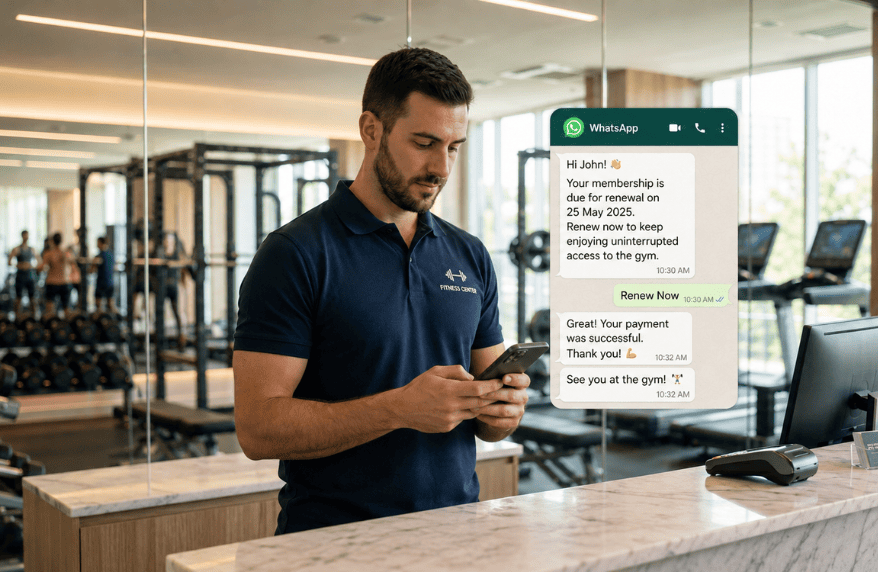
Gyms already handling payments, attendance, and communication through one connected system have a real advantage here. Compliance is easier to maintain when member data lives in a single, secured platform instead of scattered across separate tools with no shared consent record.
Frequently Asked Questions
Does DPDP apply to small, single-location gyms?
Yes. The Act applies to any business processing personal data of individuals in India, regardless of size or number of locations.
Is a fingerprint scan considered sensitive data under DPDP?
Yes, when it's used for identification and stored for verification purposes, not just a one-time photo that's immediately discarded.
Can a gym use the same consent checkbox for biometric data and marketing?
No. Valid consent must be specific to each purpose, so biometric enrollment needs its own separate consent step.
What's the penalty for mishandling biometric data under DPDP?
Penalties can reach up to 250 crore rupees per violation for serious cases, decided by the Data Protection Board of India.
Does deleting a membership automatically delete biometric data?
Not always. Gyms should have a specific process for immediate biometric data deletion, separate from general account deletion timelines.



 Built for Indian Gym Owners


